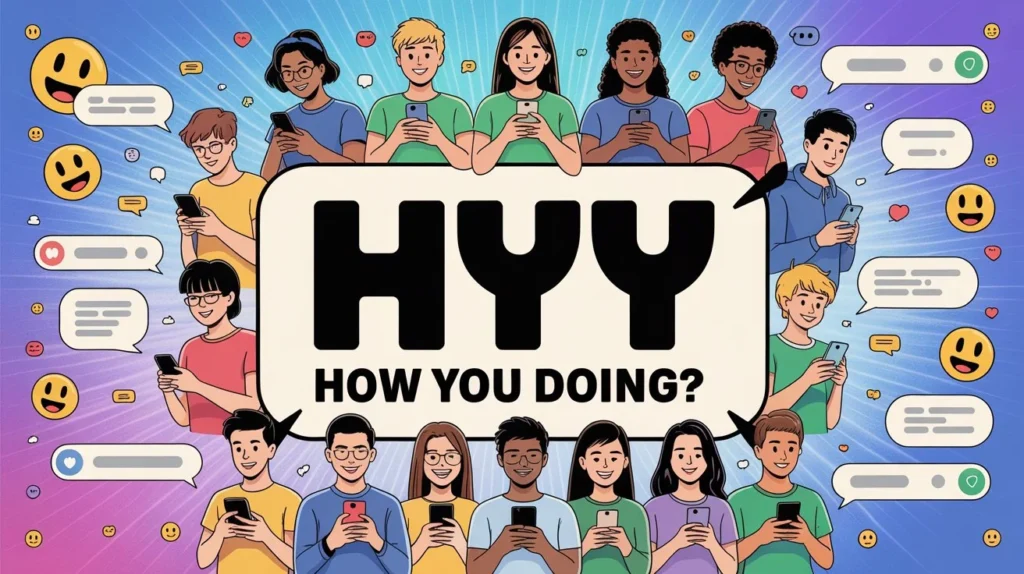
HYY in texting usually means a casual, stretched-out version of “Hi” or “Hey.” People use it to sound more excited, friendly, or playful in chats.
You’ll mostly see it on Snapchat, Instagram, or WhatsApp when someone wants to greet you in a more expressive way than a simple “hi.”
In today’s digital conversations, small spelling changes like “hyy” help people show tone—because plain text often feels flat. That’s why users search its meaning: to understand whether it’s just a greeting, a mood, or something more emotional.
HYY – Quick Meaning
HYY = Informal greeting (Hi / Hey)
It’s used to sound more:
- Friendly
- Cute or playful
- Excited or attention-seeking
Simple examples:
- “Hyy 😄 what’s up?”
- “Hyy!! long time no see”
- “Hyy you online?”
👉 It does NOT have a hidden deep meaning. It’s just a stylized greeting.
Origin & Background
The rise of “hyy” comes from internet chatting culture where people intentionally misspell words to express emotion.
Instead of typing:
- “Hi” (too plain)
- “Hey” (neutral)
Users started stretching letters:
- “heyyy”
- “hiii”
- “hyy”
Why this happened:
- Faster emotional expression in texting
- Influence of Gen Z chat culture
- Social media platforms rewarding expressive communication
- Emojis + slang blending with words
On apps like Snapchat and Instagram, short emotional greetings became a way to “set the vibe” instantly.
Over time, “hyy” became part of casual internet language rather than just a typo.
Real-Life Conversations
Here’s how “hyy” actually appears in daily chats:
Conversation 1 (WhatsApp Friend Chat)
Friend: Hyy 😄
You: Heyyy, what’s up?
Friend: Just chilling, you?
Conversation 2 (Instagram DM)
Person A: Hyy
Person B: Wow long time!! How are you?
Person A: I was just thinking about you lol
Conversation 3 (Snapchat Streak)
Friend: hyy
You: Hyy streak keeper 😂
Friend: Don’t break it this time
Conversation 4 (Random Text)
Friend: hyy
You: Why so many y’s today? 😭
Friend: Just vibing lol
Emotional & Psychological Meaning
At first glance, “hyy” looks simple—but it actually carries emotional signals.
What it expresses:
- Warmth and friendliness
- A soft attempt to start conversation
- Slight excitement or nervous energy
- Sometimes attention-seeking (in a light way)
Why people use it:
People often avoid plain “hi” because it feels cold or disconnected. “Hyy” feels more human and approachable.
What it reveals about modern communication:
Digital conversations today are emotionally compressed. Instead of long sentences, people rely on:
- Letter stretching (“heyyy”)
- Emojis
- Tone shortcuts
👉 “hyy” is part of this emotional shorthand system.
Real-life style scenario:
Imagine someone texting their crush. Instead of a formal “hi,” they type “hyy 😊” because it feels safer, softer, and less robotic.
That tiny extra “y” reduces pressure in communication.
Usage in Different Contexts
1. Social Media
- Used in DMs or story replies
- Example: “hyy 🔥 nice pic”
2. Friends & Relationships
- Casual greeting among close friends
- Example: “hyy, awake?”
3. Work / Professional Settings
- Rare and usually inappropriate
- Better to use “Hi” or “Hello”
4. Casual Conversations
- Very common
- Sets a relaxed tone immediately
👉 Key idea: the more informal the relationship, the more acceptable “hyy” becomes.
When NOT to Use It
Even though “hyy” is harmless, there are situations where it doesn’t fit.
Avoid using it:
- In formal emails
- Job applications or interviews
- Academic communication
- Serious discussions
Why?
Because it may look unprofessional or careless.
Also avoid it if:
- The other person prefers formal language
- The conversation is sensitive or emotional
- You don’t know the person well
Common Misunderstandings
People often misread “hyy” in different ways:
1. Thinking it has a hidden meaning
It doesn’t. It’s just “hi/hey.”
2. Assuming tone incorrectly
Some think:
- Extra “y” = flirting
- But often it’s just casual friendliness
3. Overanalyzing it
Not every “hyy” has emotional depth. Sometimes it’s just a quick greeting.
4. Confusing it with abbreviations
It is NOT:
- an acronym
- a code word
- a technical term
Comparison Table
| Term | Meaning | Tone | Usage |
|---|---|---|---|
| Hyy | Casual “Hi/Hey” | Friendly, playful | Informal chats |
| Hi | Standard greeting | Neutral | All situations |
| Hey | Slightly warm greeting | Friendly | Casual + semi-formal |
| Heyyy | Very expressive greeting | Excited/flirty | Close friends or crush |
| Yo | Street-style greeting | Cool/casual | Informal only |
Key Insight:
“Hyy” sits in the emotional middle—it’s more expressive than “hi” but less intense than “heyyy.” That balance makes it popular in everyday texting.
Variations / Types of “HYY”
Here are common variations you’ll see online:
- Hyy – simple casual greeting
- Hyyy – more excited tone
- Hiiii – very friendly or playful
- Heyyy – slightly flirty or excited
- Hyy 😊 – soft friendly tone
- Hyy 👀 – playful or teasing
- Hyy!! – energetic greeting
- hyy bro – casual friend greeting
- hyy love – affectionate tone
- hyy stranger – playful or ironic opener
Each variation changes emotional intensity more than meaning.
How to Respond When Someone Uses It
Casual replies:
- “Hey!”
- “Hyy 👋”
- “What’s up?”
Funny replies:
- “Why so many y’s today? 😂”
- “Typing test failed or what? 😭”
- “New alphabet unlocked?”
Mature replies:
- “Hello, how are you?”
- “Good to hear from you”
- “Hope you’re doing well”
Respectful replies:
- “Hi, nice to connect”
- “Hello! How can I help you?”
- “Good to see your message”
Regional & Cultural Usage
Western culture:
- Very common in texting among teens
- Seen as casual and friendly
Asian culture:
- Popular in WhatsApp and Instagram chats
- Often used among friends and classmates
Middle Eastern culture:
- Used informally in English chats
- Usually among younger users
Global internet usage:
- Mostly Gen Z-driven
- Strong presence on social media platforms
Generational differences:
- Gen Z: Uses it frequently and creatively
- Millennials: Prefer “hi” or “hey”
- Older generations: Rarely use it
Is It Safe for Kids?
Yes, “hyy” is completely safe.
It is:
- A simple greeting
- Non-offensive
- Free of harmful meaning
However, kids should understand:
- Context matters
- Formal vs informal usage
- When to switch to proper greetings
FAQs
1. What does HYY mean in texting?
It means a casual version of “hi” or “hey.”
2. Is HYY flirty?
Not usually. It depends on context and tone.
3. What does HYY mean from a girl?
It’s typically just a friendly greeting unless the conversation suggests otherwise.
4. What does HYY mean from a boy?
Same meaning—casual or playful greeting.
5. Is HYY rude?
No, it is not rude at all.
6. Why do people write HYY instead of HI?
To sound more expressive, warm, or playful.
7. Is HYY formal or informal?
It is strictly informal.
8. Can I use HYY in professional chats?
No, it’s better to use “Hi” or “Hello.”
9. What is the difference between HYY and HEY?
“Hyy” is softer and more playful; “hey” is standard casual greeting.
10. Does HYY have any hidden meaning?
No, it only means a greeting.
Conclusion
“HYY” may look like a small typing variation, but it reflects a bigger shift in how people communicate online. Instead of formal greetings, users now prefer expressive, emotion-driven language.
At its core, it simply means “hi” or “hey”, but its tone can change depending on context.
Once you understand it, you’ll notice it everywhere—from casual chats to social media comments. And now, instead of guessing, you can confidently respond in a way that fits the conversation.