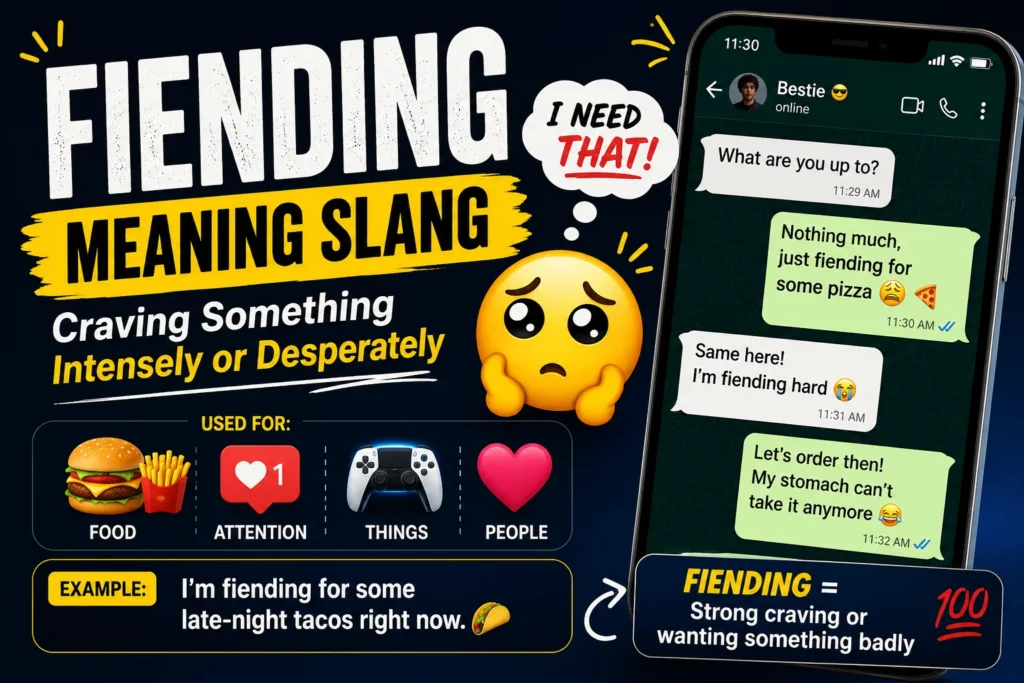
“Fiending” in slang means craving something intensely or being desperate for it. It’s often used for things like food, attention, or even a person.
It can also carry a slightly negative tone, implying someone wants something too much.
Example:
“I’m fiending for some late-night tacos right now.”
Fiending Meaning in Text
In everyday texting, “fiending” describes a strong urge or craving—usually in a casual, exaggerated way.
People use it when:
- They really want something
- They’re jokingly obsessed with something
- They’re expressing urgency or excitement
It originally came from the idea of someone addicted to something, but in modern slang, it’s often lighthearted.
Examples:
- “I’m fiending for coffee today 😩”
- “He’s fiending for her attention”
- “We’re fiending for that new episode”
“Fiending” functions as a verb form (gerund), from the base verb “fiend” — it typically follows “I’m,” “he’s,” or “we’re” (“I’m fiending for tacos”), rather than standing alone the way an interjection would.
“Origin & History of Fiending”
“Fiending” comes from the older word “fiend,” which has been used since the 1800s to describe someone addicted to a substance — most recognizably in the phrase “dope fiend.” The term carried real weight in the 1980s and 90s, particularly in AAVE and hip-hop culture, where it described the visible toll of addiction during that era. Over time, especially as the phrase moved into mainstream texting and social media, its meaning softened considerably — today “fiending” is almost always used lightly, for cravings like food, attention, or a new show, not as a literal reference to substance dependency. It’s worth knowing the heavier root, even if the word rarely carries that weight in casual conversation today.
Real Chat Examples (How People Actually Use It)
1. Late-night craving
Friend: You still up?
You: Yeah, I’m fiending for snacks rn
2. Talking about someone
Friend: Why is he texting you again?
You: He’s lowkey fiending for me lol
3. Social media context
Friend: You posted again?
You: Yeah I’m fiending for likes today 😂
4. Everyday situation
Friend: Wanna grab coffee?
You: YES I’ve been fiending for it all morning
Work chat
“You’ve refreshed your email five times” / “I’m fiending for that reply, it’s been three days”
Sibling text
“Mom’s making tacos tonight” / “I’ve been fiending for her tacos all week, tell her to hurry”
Gaming Discord
“New update finally dropped” / “I’ve been fiending for this patch for a month”
Dating text
“Miss you already lol” / “Same, fiending for the weekend already”
Fitness group chat
“Rest day today” / “I’m fiending for the gym not gonna lie”
Family group chat
“Grandma’s soup is ready” / “I’ve been fiending for this since this morning”
Emotional Meaning & Tone
“Fiending” isn’t just about wanting something—it’s about wanting it badly.
Common tones:
- Playful: “I’m fiending for pizza”
- Dramatic/funny: “I’m fiending like crazy 😭”
- Slightly negative: “He’s fiending for attention”
Tone shifts based on context:
- Friendly: When used for food, shows, or jokes
- Neutral: Just expressing a strong craving
- Negative: When describing someone as desperate or clingy
Fiending Meaning from a Girl / Guy
From a Girl
When a girl says “fiending,” it often feels:
- More playful or expressive
- Sometimes teasing (especially about attention or cravings)
Example:
“I’m fiending for iced coffee” → casual and relatable
From a Guy
When a guy uses it, it’s usually:
- Straightforward
- Sometimes slightly more blunt
Example:
“I’m fiending for that game to drop”
👉 Overall, the meaning doesn’t change much—just the tone and delivery.
Note: this is a loose conversational pattern some people notice, not a fixed rule — usage depends far more on the individual and the relationship than on gender.
How to Reply to “Fiending”
Casual Replies
- “Same honestly”
- “I feel that 😭”
- “You’re not alone”
Friendly Replies
- “Let’s go get it then!”
- “Say less, I’m in”
- “We should fix that ASAP”
Funny Replies
- “Relax 😂 it’s not that serious”
- “You need help fr”
- “You acting like it’s life or death”
Short Responses
- “Same”
- “Mood”
- “Facts”
Is “Fiending” Rude or Safe to Use?
“Fiending” is generally safe and common in casual conversations.
However:
- It can sound rude if used to describe someone negatively
- It can feel judgy if you say someone is “fiending” for attention
Examples:
- ✅ “I’m fiending for fries” → totally fine
- ⚠️ “She’s fiending for attention” → can sound critical
👉 Use it carefully when talking about people, not just things.
Where You’ll See “Fiending”
You’ll spot this slang across most social platforms:
- Texting: Everyday conversations
- Snapchat: Casual snaps and captions
- TikTok: Relatable craving or obsession content
- Instagram: Memes and story captions
- WhatsApp: Less frequent than on TikTok or Instagram, but shows up in one-on-one chats between people who already know each other well, usually about food or plans.
- X (formerly Twitter): Common in reply threads and quote-posts reacting to trailers, food posts, or anticipated releases — “I’m fiending for this” is a common comment under hype content.
It’s especially common in younger, internet-savvy audiences
Similar Slang Comparison
| Slang | Meaning | Tone |
|---|---|---|
| Craving | Strong desire for something | Neutral |
| Desperate | Wanting something too much | Negative |
| Thirsty | Seeking attention/validation | Playful/negative |
| Obsessed | Really into something | Positive/intense |
| Addicted | Can’t stop wanting it | Strong/serious |
| Chasing | Actively pursuing something | Neutral |
👉 Key Insight:
“Fiending” sits right between craving and desperate. It can be playful or slightly negative depending on how you use it.
Variations & Types of “Fiending”
Here are common ways people use or adapt it:
Fiending for food
– craving something to eat
Fiending for attention
– wanting validation or notice
Fiending for someone
– strongly interested in a person
Fiending bad
– emphasizing intensity
Lowkey fiending
– trying to hide the craving
Highkey fiending
– obvious and strong craving
Fiending over something
– obsessing about it
Stop fiending
– telling someone to calm down
Always fiending
– someone who constantly craves things
Fiending again
– repeated behavior
Common Mistakes & Misunderstandings
1. Using it too seriously
“Fiending” is usually casual—don’t use it in formal situations.
2. Misreading tone
Someone saying “you’re fiending” might be joking—or criticizing.
3. Overusing it
If you use it in every sentence, it loses impact.
4. Assuming it’s always negative
It’s not—most of the time, it’s just playful exaggeration.
FAQ Section
What does “fiending” mean in Snapchat?
It means craving something strongly—usually used in captions or chats to express desire or excitement.
What does “fiending” mean from a girl?
Typically playful or expressive, often about cravings, attention, or something she really wants.
Is “fiending” rude?
Not usually—but it can sound rude if you use it to describe someone as desperate.
Does “fiending” mean addicted?
Not literally. It’s more of a casual, exaggerated way to say you really want something.
Can I use “fiending” in real life?
Yes, it’s common in casual speech—just avoid formal settings.
Is “fiending” flirting?
Sometimes. If someone says they’re “fiending for you,” it can be playful flirting.
Where does “fiending” come from?
“Fiending” comes from “fiend,” a term used since the 1800s for someone addicted to a substance, most recognizably in “dope fiend.” It became especially prominent in AAVE and hip-hop culture in the 1980s and 90s, tied to the realities of addiction during that period. In modern slang, the word has softened significantly and is now used casually for everyday cravings rather than literal dependency.
Is it okay to say “fiending” for something small, like food?
Yes — this is actually the dominant modern usage. While the word has heavier historical roots, “fiending for tacos” or “fiending for a nap” is how the vast majority of people use it today, and it reads as playful exaggeration rather than a reference to addiction.
Conclusion
“Fiending” is one of those slang words that instantly adds personality to a message. It’s simple, expressive, and super relatable—whether you’re craving food, attention, or just a good vibe.
Use it casually, keep the tone light, and you’ll sound natural without trying too hard.
It’s a word with real history behind it — but in everyday texting, it’s almost always used lightly, not literally.