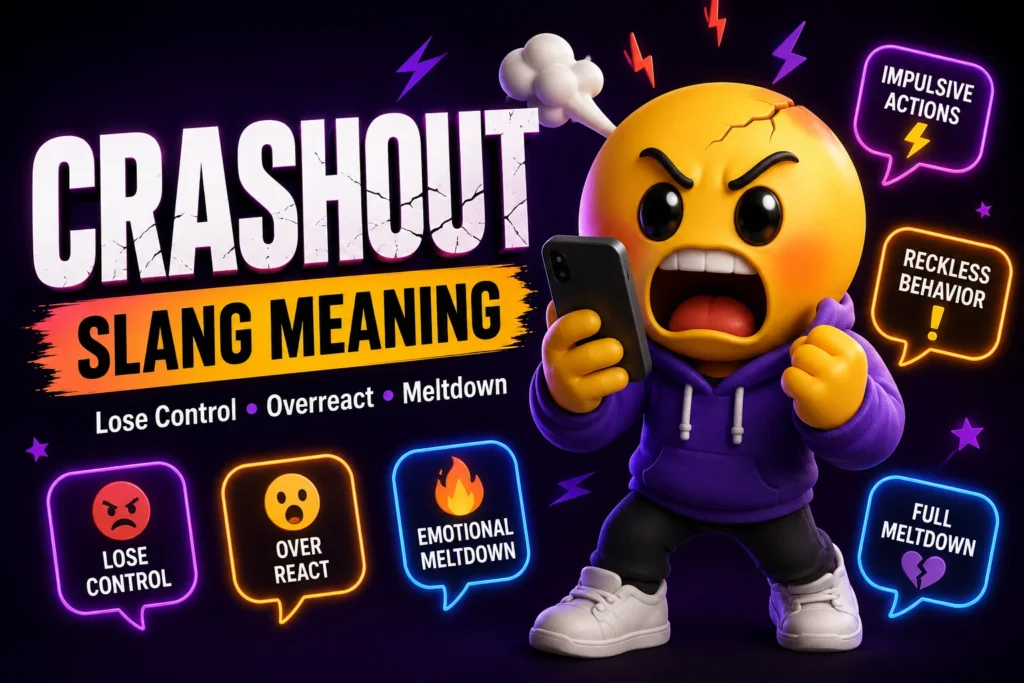
Crashout slang meaning most commonly refers to someone who loses emotional control and reacts impulsively, often in a public or embarrassing way. The term has become especially popular on TikTok and X, where users describe dramatic meltdowns, reckless decisions, or emotional outbursts as a “crashout.”
Unlike many internet terms, crashout isn’t an acronym or abbreviation. It’s a slang word that evolved from African American Vernacular English (AAVE) and has spread into mainstream internet culture through memes, viral videos, sports commentary, livestreams, and social media discussions. Many people also confuse it with “crashing out” from exhaustion, making its online meaning worth explaining clearly.
What Does Crashout Mean in Slang?
Today, crashout usually describes a person who completely loses their composure, acts irrationally, or makes reckless choices because of overwhelming anger, frustration, embarrassment, or emotion.
Someone called a crashout isn’t simply upset—they’re acting in a way that others see as excessive, impulsive, or self-destructive.
For example:
- “He argued with everyone in the comments. Total crashout.”
- “Don’t crash out over one bad game.”
- “She almost crashed out after seeing that post.”
In internet slang, the phrase often carries humor, criticism, or exaggeration. It suggests that someone has gone beyond normal frustration and entered full emotional meltdown mode.
Is Crashout an Acronym, Abbreviation, or Slang Word?
Crashout is a slang word.
It is not:
- An acronym
- An abbreviation
- A texting code
- An initialism
Instead, it’s an informal expression that describes someone’s behavior rather than representing multiple words.
The related verb phrase “crash out” is older than the slang itself. Traditionally, English speakers used it to mean fall asleep suddenly or be knocked unconscious. However, today’s internet slang uses it very differently.
The Real Meanings of Crashout
1. Someone Who Has an Emotional Meltdown (Most Common Meaning)
This is by far the meaning most people search for.
A crashout is someone who reacts dramatically instead of staying calm. Their emotions take over, leading them to argue, yell, threaten people, post impulsively, or make poor decisions.
Examples:
- “He became a crashout after losing the debate.”
- “Everyone expected her to stay calm, but she crashed out.”
- “Don’t let them bait you into being a crashout.”
This meaning appears constantly in:
- TikTok videos
- Sports discussions
- Gaming communities
- Livestream clips
- Meme pages
- X (formerly Twitter)
It’s often used jokingly, but it can also criticize genuinely reckless behavior.
2. To Lose Control or “Crash Out”
People also use crash out as a verb.
Instead of describing the person, it describes the action itself.
Examples:
- “He’s about to crash out.”
- “I almost crashed out after reading those comments.”
- “She crashed out during the meeting.”
Here, the speaker means someone reached a breaking point emotionally.
The phrase usually implies that emotions—not logic—are driving the person’s actions.
3. Traditional English Meaning: Fall Asleep Suddenly
Long before social media adopted the slang, crash out already existed in English.
In casual conversation, it could mean:
- falling asleep immediately
- sleeping somewhere temporarily
- passing out from exhaustion
Examples:
- “I’m exhausted. I’m going to crash out.”
- “He crashed out on the couch.”
Although this meaning still exists, younger internet users usually recognize crashout as the emotional slang first, especially when discussing online drama.
Understanding the surrounding conversation helps determine which meaning someone intends.
How Crashout Is Used on Different Social Media Platforms
Crashout on TikTok
TikTok is where the slang exploded into mainstream popularity.
Creators frequently label dramatic reactions, livestream arguments, sports clips, celebrity controversies, and emotional rants as crashouts.
Typical captions include:
- “Ultimate crashout.”
- “Bro really crashed out.”
- “This is the biggest crashout of 2026.”
Many videos exaggerate the term for comedic effect, even when someone’s reaction isn’t especially serious.
Crashout on X (Formerly Twitter)
On X, the word commonly appears during:
- Sports debates
- Political arguments
- Celebrity controversies
- Viral feuds
- Gaming discussions
Users often accuse someone of crashing out after they post dozens of angry replies, argue with strangers, or react emotionally to criticism.
Example:
“He’s replying to everyone. This is a full crashout.”
Crashout on Instagram
Instagram users mostly encounter the term in:
- Reels
- Meme pages
- Sports accounts
- Entertainment posts
- Celebrity gossip
Comment sections frequently describe someone as a crashout after seeing an emotional public response or an embarrassing online argument.
Crashout on Snapchat
Crashout appears less frequently in Snapchat than on TikTok or X, but friends sometimes use it in private chats.
Examples include:
- “Don’t crash out over that.”
- “He totally crashed out after the game.”
Here, the meaning stays the same: someone overreacted emotionally.
Crashout on WhatsApp
WhatsApp doesn’t have its own slang culture, but the term appears naturally in conversations among friends who also use TikTok or X.
Someone might message:
“Relax—you don’t need to crash out.”
Because WhatsApp reflects everyday conversation, internet slang often carries over without changing meaning.
Grammar and Language Role
Understanding how crashout functions grammatically makes it much easier to use correctly.
Part of Speech
Crashout most commonly appears as:
- Noun: “He’s a crashout.”
- Verb phrase (crash out): “Don’t crash out.”
Both forms are common online.
Sentence Position
As a noun:
- “That guy is a crashout.”
- “Nobody likes a crashout.”
As a verb:
- “She might crash out.”
- “Don’t crash out over something small.”
It usually appears near the end of informal sentences but works naturally almost anywhere.
Can It Replace a Full Sentence?
Sometimes.
Among close friends, simply saying:
“Crashout.”
can summarize someone’s behavior without needing further explanation.
Likewise:
“He’s crashing out.”
can stand alone because the context is already understood.
Formal vs. Informal Register
Crashout is highly informal.
It’s appropriate for:
- Text messages
- Social media
- Memes
- Gaming
- Casual conversation
It is generally not appropriate for:
- Academic writing
- Professional emails
- Business presentations
- Formal reports
Instead of saying someone “crashed out” in a workplace report, you’d usually say they overreacted, lost emotional control, or acted impulsively.
Crashout in Different Tones
The same slang word can express humor, criticism, sympathy, or playful teasing depending on the situation.
Funny Tone
A: Did you see Jake lose at Mario Kart?
B: Yeah, he unplugged his controller.
A: That’s legendary.
B: Certified crashout.
Sarcastic Tone
A: He wrote twenty angry comments because someone disagreed.
B: Totally calm behavior.
A: Very mature.
B: Peak crashout.
Playful Tone
A: You almost threw your phone after losing.
B: I was just frustrated!
A: Five more seconds and you’d crash out.
B: Okay… maybe a little.
Serious Tone
A: He’s been arguing with everyone online all day.
B: Maybe he should log off for a while.
A: Yeah, it looks like he’s crashing out.
B: Hopefully he cools down soon.
Real Chat Examples
Chat Example 1 – TikTok Comments
A: Did you watch that livestream?
B: Yeah, he blocked everyone who disagreed.
A: Complete crashout.
B: The comments were roasting him.
Chat Example 2 – Gaming Friends
A: Don’t rage quit again.
B: I’m trying not to.
A: One more loss and you’ll crash out.
B: Probably.
Chat Example 3 – School Friends
A: Why did Ethan leave the group chat?
B: He got mad over a joke.
A: That’s a crashout.
B: He’ll probably come back tomorrow.
Chat Example 4 – Basketball Discussion
A: Coach benched him.
B: Then he started yelling.
A: Huge crashout.
B: Definitely hurt his reputation.
Chat Example 5 – Instagram Reel
A: Read the comments.
B: Why is everyone saying “crashout”?
A: They’re talking about his reaction.
B: Now it makes sense.
Chat Example 6 – Family Group Chat
A: Dad got really upset over the Wi-Fi.
B: Tell him not to crash out.
A: I’ll restart the router first.
B: Good idea.
Chat Example 7 – Workplace Friends
A: Did you hear what happened after the meeting?
B: Yeah, Mark started arguing with everyone.
A: He really crashed out.
B: HR had to step in.
Chat Example 8 – Snapchat
A: Why did Emma delete all her Stories?
B: She got into an argument with someone.
A: Sounds like she crashed out.
B: She’s feeling better now.
Chat Example 9 – College Friends
A: I thought he was joking.
B: Nope, he actually walked out.
A: That’s a serious crashout.
B: Everyone was surprised.
Chat Example 10 – Sports Group Chat
A: The referee made one bad call.
B: Then the fans lost it.
A: Social media is calling it a crashout.
B: I can see why.
Chat Example 11 – Gaming Discord
A: He uninstalled the game after one match.
B: That’s dramatic.
A: Classic crashout behavior.
B: He’ll probably reinstall it tomorrow.
How to Reply When Someone Says “Crashout”
Your reply depends on whether the comment is meant as a joke, criticism, or genuine concern.
Funny Reply
- “I’m trying my best not to.”
- “Give me five minutes to calm down.”
- “I promise the controller is safe.”
- “Not my finest moment.”
Serious Reply
- “You’re right. I overreacted.”
- “I needed to step away for a bit.”
- “I’ll handle it better next time.”
- “Thanks for pointing it out.”
Flirty Reply (When Appropriate)
- “Only because you ignored my message.”
- “You make me lose my cool.”
- “Guess you have that effect on me.”
Use flirty replies only with someone you’re already comfortable joking with.
Neutral or Unbothered Reply
- “Maybe.”
- “It happens.”
- “I’m good now.”
- “Let’s move on.”
Crashout vs Similar Internet Slang
| Term | Meaning | Usage Context | Tone | Popularity | Confusion Risk |
|---|---|---|---|---|---|
| Crashout | Losing emotional control or reacting recklessly | TikTok, X, gaming, memes | Critical or humorous | Very High | Low |
| Crash out | To lose control emotionally or suddenly fall asleep (depending on context) | Casual speech, social media | Neutral | High | Medium |
| Tweaking | Acting strangely, irrationally, or overreacting | TikTok, memes | Humorous | High | Medium |
| Raging | Becoming very angry, especially while gaming | Gaming, sports | Intense | High | Low |
| Meltdown | Emotional breakdown or loss of composure | General English | Serious | Very High | Very Low |
| Keeping your cool (opposite) | Remaining calm under pressure | Everyday English | Positive | High | Very Low |
Who Uses the Term “Crashout”?
Age Groups
Gen Z (approximately ages 13–28)
Gen Z uses crashout most frequently. It appears naturally in memes, gaming clips, livestreams, sports discussions, and reaction videos.
Millennials (approximately ages 29–44)
Millennials generally recognize the term if they spend time on TikTok, X, Reddit, or gaming communities. However, many still prefer words like meltdown, rage, or overreacting in everyday conversation.
Older generations are less likely to use crashout unless they’re active on social media where the slang has become common.
Regional Usage
United States
The slang is most established in the United States, where it spread through online communities, sports culture, hip-hop discussions, livestreams, and social media.
United Kingdom
UK users increasingly recognize the term through TikTok, football discussions, and shared internet culture, although traditional expressions like “lost it” remain more common.
Global
Because TikTok, Instagram Reels, YouTube Shorts, and X have global audiences, the slang is now understood by many English-speaking internet users worldwide. However, usage is still strongest among people who regularly follow American online culture.
Platform Breakdown
| Platform | How It’s Used |
|---|---|
| TikTok | Viral reaction videos, memes, sports edits, livestream clips. |
| X (Twitter) | Commentary on arguments, sports, politics, and celebrity drama. |
| Meme pages, Reels, and entertainment posts. | |
| Snapchat | Casual chats between friends describing someone’s overreaction. |
| Private conversations among friends familiar with internet slang. |
Origin and Internet Culture
The modern slang crashout developed from the older English phrase “crash out,” which traditionally meant to fall asleep suddenly or to sleep somewhere temporarily after becoming exhausted.
Its newer figurative meaning—losing emotional control or acting recklessly—emerged within African American Vernacular English (AAVE) before spreading through online communities. Like many expressions that originate in AAVE, the term later gained wider visibility through music, sports discussions, livestreams, and viral social media content.
TikTok played a major role in popularizing the word. Short-form videos often paired dramatic clips with captions such as:
- “Bro crashed out.”
- “Biggest crashout of the week.”
- “Don’t crash out.”
Sports creators adopted it to describe players, coaches, or fans who reacted emotionally during games. Gaming communities used it for rage quits, while meme pages exaggerated everyday frustrations by calling them “crashouts,” helping the term become part of mainstream internet vocabulary.
Today, crashout usually implies an emotional overreaction rather than physical exhaustion, showing how internet culture can reshape the meaning of older English expressions.
Is Crashout Rude or Offensive?
Is It Offensive?
Not inherently.
The word itself contains no profanity and is generally not considered offensive. However, it can sound insulting if used to mock someone who is genuinely distressed or going through a difficult situation.
Does It Contain Explicit Language?
No.
Crashout contains no swear words or explicit content.
Is It Appropriate at School or Work?
In casual conversations with classmates or friends, it’s usually acceptable.
In professional settings, however, it’s better to use more neutral language such as:
- overreacted
- lost composure
- acted impulsively
- became emotional
These alternatives are clearer and more appropriate in formal communication.
Cultural Sensitivity
Because the modern slang meaning has roots in AAVE, it’s worth using the term respectfully and understanding its cultural background rather than treating it as just another internet meme. Avoid using it to ridicule someone experiencing a genuine mental health crisis or emotional distress.
Real-World Observation
One reason crashout has spread so quickly is that it captures a type of behavior people regularly witness online. Social media rewards dramatic reactions, making emotional outbursts highly visible and widely shared. As a result, users needed a short, memorable label for moments when someone appears to lose self-control in public. Whether discussing a heated sports argument, a livestream confrontation, or an impulsive series of angry posts, crashout efficiently communicates that someone crossed the line from ordinary frustration into an obvious overreaction.
Frequently Asked Questions
What does “crashout” mean in slang?
In modern internet slang, crashout refers to someone who loses emotional control and reacts impulsively or dramatically. It often describes public arguments, angry posts, rage quits, or other visible overreactions. The word is commonly used on TikTok, X, Instagram, and in gaming communities.
Is crashout a bad word?
No. Crashout is not profanity or a swear word. However, depending on the context, it can be insulting because it suggests someone behaved irrationally or overreacted.
Is crashout the same as having a mental breakdown?
No. Internet slang usually uses crashout humorously or casually to describe an emotional overreaction. It should not be confused with genuine mental health conditions or serious psychological crises.
Why is everyone saying “crashout” on TikTok?
TikTok creators frequently use the term in reaction videos, sports edits, memes, and livestream clips. The short, catchy phrase makes it easy to describe dramatic online behavior, helping it spread rapidly across social media.
Can crashout mean falling asleep?
Yes. The older English phrase “crash out” traditionally means to fall asleep quickly or sleep somewhere temporarily. Context determines whether someone means the older literal definition or the newer slang meaning.
Is crashout only used by Gen Z?
No, but Gen Z uses it most frequently. Millennials and other age groups increasingly recognize the slang because it has become common across major social media platforms.
Is “crashing out” different from “crashout”?
They are closely related. Crashout usually refers to the person or labels the behavior, while crashing out describes the action itself. In everyday conversations, people often use them interchangeably.
What does “don’t crash out” mean?
It means don’t overreact, stay calm, or don’t let your emotions take over. Friends often say this before someone responds impulsively during an argument or stressful situation.
Why do gamers say “crashout”?
Gaming communities use the term when someone rage quits, starts arguing, blames teammates excessively, or reacts emotionally after losing. It’s often meant humorously but can also criticize poor sportsmanship.
Can you call someone a crashout?
Yes, but consider the situation. It can be a lighthearted joke among friends, yet it may offend someone if they’re genuinely upset or dealing with a serious issue.
Conclusion
Crashout has become one of the fastest-growing pieces of internet slang because it perfectly describes dramatic emotional overreactions that people frequently see online. While the phrase originally referred to falling asleep suddenly, its modern slang meaning now centers on losing composure, acting impulsively, or reacting far more intensely than the situation requires.
Understanding the context is important. On TikTok, X, Instagram, Snapchat, and WhatsApp, the slang almost always refers to emotional behavior rather than sleep.
Usage Tips
- Use crashout only in informal conversations.
- Consider the surrounding context before interpreting its meaning.
- Remember that crashout (noun) and crash out (verb) are both common.
- Use the term playfully, not to mock genuine emotional distress.
Common Mistakes
- Confusing the slang with the older meaning of falling asleep.
- Assuming it’s an acronym or abbreviation.
- Using it in formal workplace or academic writing.
- Applying it to someone experiencing a real mental health crisis instead of an ordinary emotional overreaction.
When to Use It
Use crashout when talking about memes, gaming, sports, livestreams, or casual online conversations involving obvious overreactions.
When to Avoid It
Avoid using the term in professional settings or when discussing someone facing genuine emotional or mental health challenges, where more respectful and precise language is appropriate.