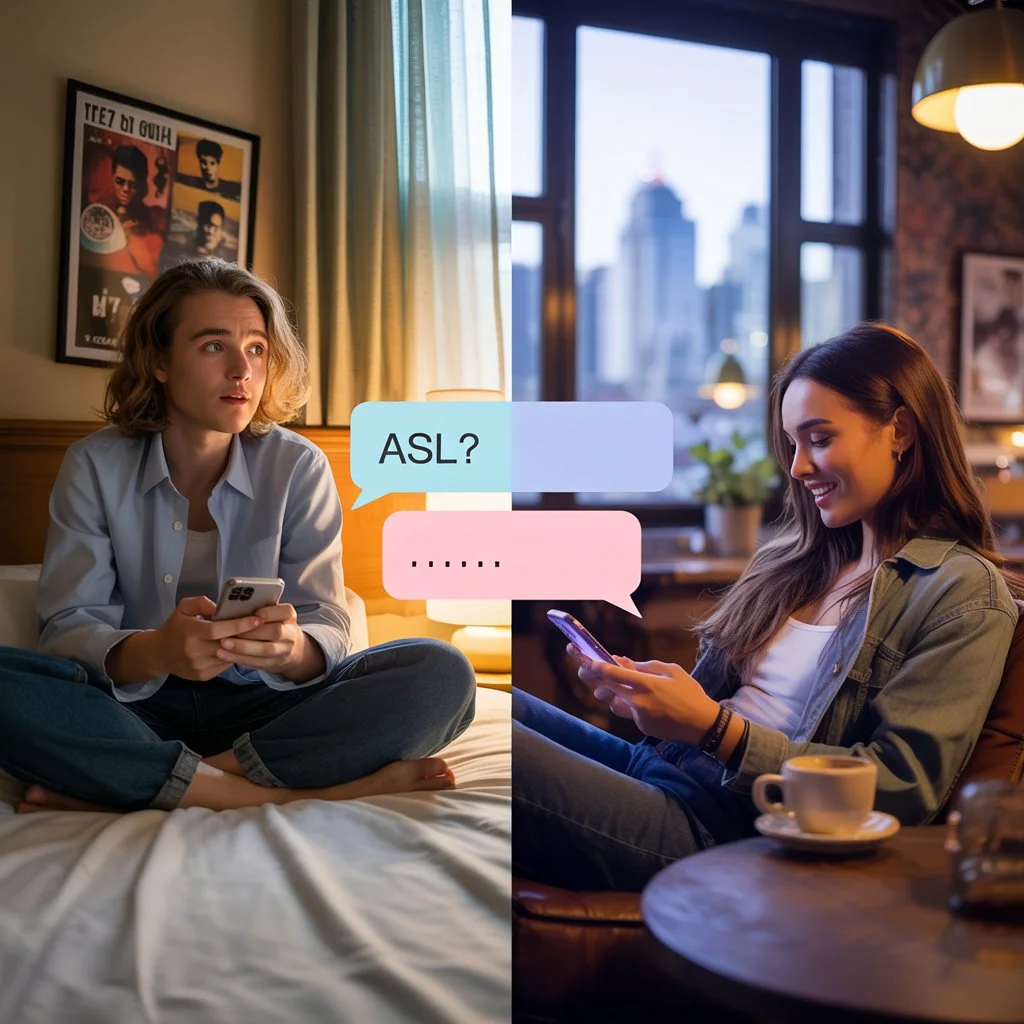
ASL in chat usually means “Age, Sex, Location,” a quick way people ask for basic personal details online. But depending on context, it can also mean American Sign Language or even something entirely different. This is why many people search for it—because the meaning changes with the situation, and that confusion can lead to awkward or even uncomfortable conversations.
If you’ve ever seen “asl?” pop up in a message and felt unsure how to respond, you’re not alone. Let’s break it down clearly so you always know what’s being asked—and how to handle it confidently.
ASL Meaning in Chat – Quick Meaning
In most online chats, ASL stands for:
- A = Age
- S = Sex (or gender)
- L = Location
It’s a shorthand question asking someone to introduce themselves briefly.
Examples:
- “Hey, asl?”
- “asl pls”
- “16/f/UK”
In other contexts, ASL can also mean:
- American Sign Language (especially in educational or accessibility discussions)
Origin & Background
ASL became popular in the early days of internet chat rooms, especially on platforms like AOL Instant Messenger and IRC. Back then, people didn’t have profiles with detailed bios, so quick shorthand questions were essential.
“ASL?” was efficient. It saved time and allowed users to decide quickly whether they wanted to continue the conversation.
As social media evolved—think Instagram, TikTok, and WhatsApp—the need for ASL decreased because profiles already show much of this information. Yet, the phrase never fully disappeared. Instead, it transformed:
- Old meaning: Practical introduction
- Modern use: Sometimes casual, sometimes intrusive, sometimes even ironic
Today, younger users may use it jokingly or as a nostalgic throwback, while others still use it seriously in anonymous chats.
Real-Life Conversations
Person A: Hey, asl?
Person B: 22/m/Lahore. You?
Person A: 20/f/Karachi
Instagram DMs
Person A: You seem cool, asl?
Person B: Umm… why do you need that?
Person A: Just asking 😅
TikTok Comments
Person A: asl anyone?
Person B: Bro this isn’t 2005 💀
Text Messages
Person A: Hi, asl?
Person B: I’d rather not share that right now. What’s up?
These examples show how tone matters. The same phrase can feel friendly—or uncomfortable—depending on how it’s used.
Emotional & Psychological Meaning
At its core, ASL reflects a desire for quick connection. It’s about reducing uncertainty in a conversation.
But emotionally, it can carry different signals:
- Curiosity
- Interest (sometimes romantic or social)
- Evaluation (deciding whether to continue talking)
In modern digital culture, it can also feel:
- Too direct
- Slightly invasive
- Outdated or awkward
A real-life scenario:
Imagine you’re chatting with someone new online. Within seconds, they ask “asl?” It might feel like they’re skipping genuine conversation and jumping straight into judging you based on basic details. That can create distance instead of connection.
This shift reveals something deeper: people today value context and personality over quick labels.
Usage in Different Contexts
Social Media
Used less frequently now. When it appears, it’s often:
- Ironic
- Nostalgic
- Or from strangers in anonymous spaces
Friends & Relationships
Rare among close friends. It may be used jokingly:
- “Wait, asl again? 😂”
Work / Professional Settings
Not appropriate. It can come across as unprofessional or even inappropriate.
Casual vs Serious Tone
- Casual: Playful or sarcastic
- Serious: Direct personal inquiry
Tone depends heavily on the platform and relationship.
When NOT to Use It
Avoid using ASL in these situations:
- Professional conversations
- With people you don’t know well
- In sensitive or formal discussions
- When cultural boundaries may be unclear
It can feel intrusive, especially when:
- Asked too early
- Used without context
- Repeated after someone avoids answering
Common Misunderstandings
1. Thinking it always means American Sign Language
Context matters. In chat, it usually doesn’t.
2. Assuming it’s harmless
Some people find it too personal.
3. Misreading tone
It can be:
- Friendly
- Flirty
- Suspicious
4. Taking it literally every time
Sometimes it’s used jokingly, not seriously.
Comparison Table
| Expression | Meaning | Tone | Usage |
|---|---|---|---|
| ASL | Age, Sex, Location | Direct | Online chats |
| Intro? | Ask for introduction | Neutral | Modern chats |
| Tell me about you | Open-ended intro | Friendly | Social media |
| Who are you? | Identity question | Serious | Formal/informal |
| None of your business | Refusal | Defensive | Personal boundary |
Key Insight:
ASL is efficient but outdated. Modern communication prefers more natural, open-ended ways of getting to know someone.
Variations / Types
- asl pls – Polite request for details
- asl?? – Emphasized curiosity
- asl quick – Urgent tone
- asl fr – “For real” emphasis
- asl anyone – Group inquiry
- asl check – Casual or joking use
- asl drop – Asking people to share info
- asl rn – “Right now” context
- asl dm me – Private conversation request
- asl or nah – Playful or sarcastic tone
How to Respond When Someone Uses It
Casual Replies
- “23/f/Islamabad 😊”
- “25/m—what about you?”
Funny Replies
- “100/alien/Mars 👽”
- “Old enough / mysterious / somewhere on Earth”
Mature Replies
- “I prefer not to share that right away. Tell me about yourself first.”
Respectful Replies
- “Hey! I’m 24 and from Lahore. Nice to meet you.”
Your response should match your comfort level—not their expectation.
Regional & Cultural Usage
Western Culture
Common in older internet culture. Now mostly outdated or used ironically.
Asian Culture
Less direct communication is preferred, so ASL can feel too blunt.
Middle Eastern Culture
Privacy is highly valued, making ASL potentially inappropriate in many contexts.
Global Internet Usage
Still appears in anonymous chat platforms where profiles are limited.
Generational Differences
- Gen Z: Rarely uses it seriously; often jokes about it
- Millennials: More familiar with original usage
Is It Safe for Kids?
Not always. While it may seem harmless, ASL can encourage sharing personal information with strangers. Kids and teens should be cautious and avoid responding to such questions in unknown environments.
FAQs
1. What does ASL mean in texting?
It usually means “Age, Sex, Location.”
2. Is ASL still used today?
Yes, but less frequently and often in a joking or nostalgic way.
3. Can ASL mean something else?
Yes, it can also mean American Sign Language depending on context.
4. Is it rude to ask ASL?
It can feel intrusive, especially with strangers.
5. How should I respond to ASL?
Only share what you’re comfortable with. You can also decline politely.
6. Why do strangers ask ASL?
Usually to quickly understand who they’re talking to.
7. Is ASL safe to answer online?
Be cautious. Avoid sharing personal details with unknown people.
Conclusion
ASL started as a simple shortcut in early internet culture, but today it carries more complexity than it seems. What once felt efficient can now feel abrupt or even uncomfortable, depending on the context.
Understanding when and how to use it—or respond to it—gives you control over your online interactions. You don’t have to follow outdated norms. Communication today is more about connection than quick labels.
Use ASL wisely, respond thoughtfully, and always prioritize your comfort over convenience.